
“Art, I believe, is a symbol of love, and the embodiment of this symbol is the artist.”
-Michio Itō
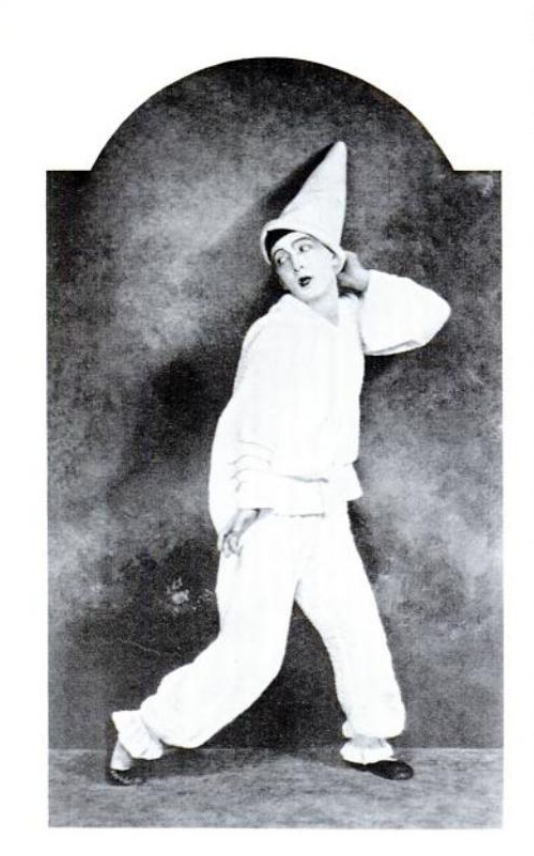
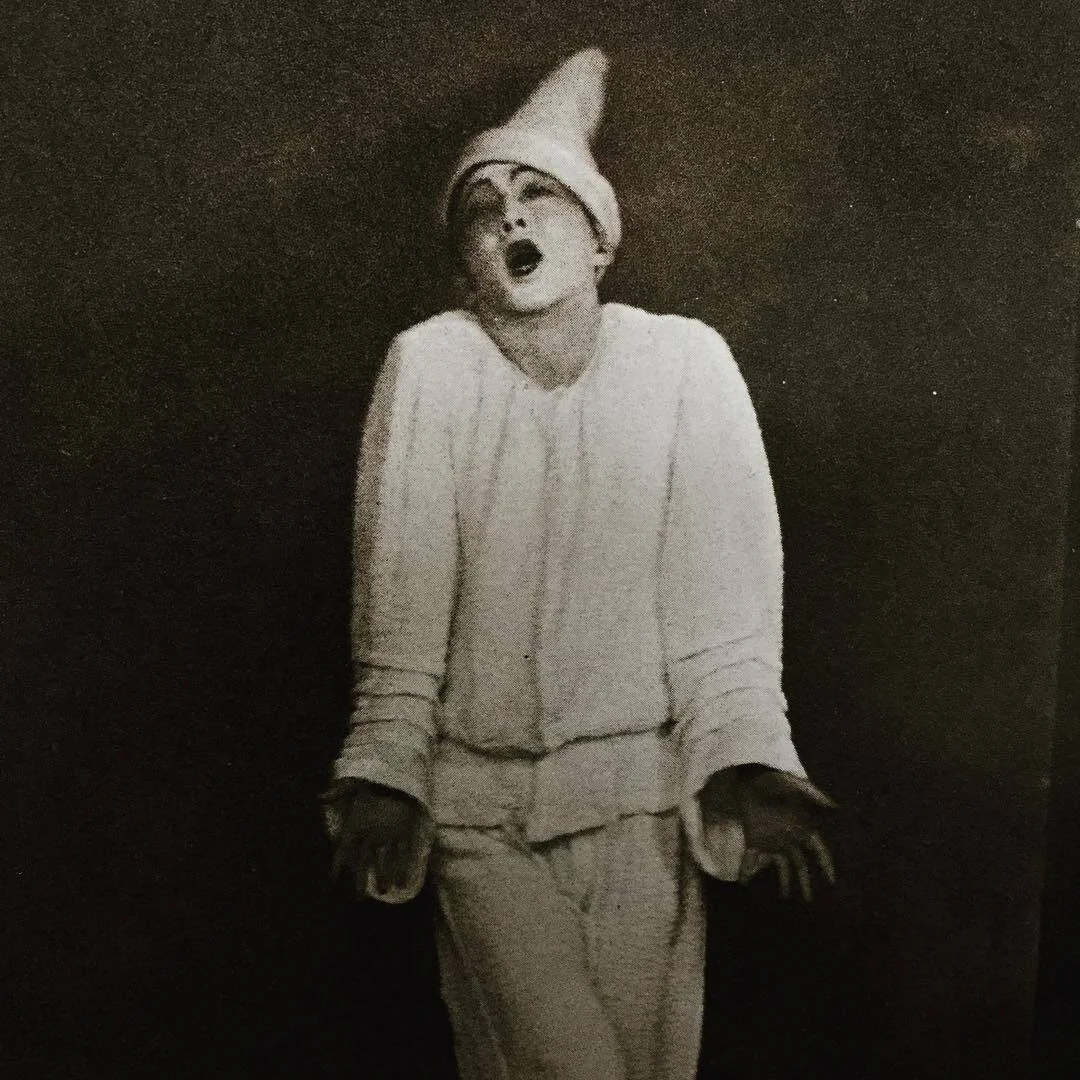
source: Page 14 of Michio Ito: The Dancer and His Dances by Helen Caldwell. Published 1977 by University of California Press
From what I can tell from Caldwell’s book as well as chronology of Itō’s career provided by the Michio Itō foundation, these costumes were from a pantomime play called “The Donkey” performed on February 3, 1917 in Greenwich Village, New York.
“In 1917 Ito danced with Adolph Bolm’s Ballet Intime, a relatively small group of international performers that toured featuring non-western dances.” (source: michioito.org)
This year marked the end of Bolm’s own run as Pierrot in Le Carnaval during his time with the Diaghilev company and Ballets Russes - from 1909-1917. (source: adolphbolm.com)
During 1917, both Bolm and Itō, as part of Ballet Intime, toured small Midwest cities.
“ In his memoirs, he commented that “We are going to visit towns that heretofore have only been names to us. We shall cross the Mississippi. We shall see the high rugged mountains and the painted plains. We shall come to know America and America will come to know the spirit of the new dance.”
Allusions to Pierrot and the mask does not stop there.
“Helen Caldwell reports that Ito kept his face immobile in performance "so that his personality was further excluded and the idea enhanced" though, she adds, his face was "not without expression" but had an internal focus" In year's sense, these dance poems became for Ito a "mask" which distills individual expression into symbolic form.”
Mary Fleischer, Embodied Texts: Symbolist Playwright-Dancer Collaborations. p 176
and
His dance of the fox, his one distinctively Japanese number, disclosed him bare-footed, in the mask aforesaid and in the dress of his country. Beginning in writhings like to the motion of an excited animal it rose to a frenzy of such movement, for the fox of the legend was the Pierrot of beasts, moonstruck into a delirium of the dance until ecstatic death stayed him. There was no questioning the vividness of Mr. Ito’s dancing or of the imagination behind it, or yet again of his rare command of singularly rhythmical movement in which head, limbs and body all answer to a mutual beat.
source: H.T. Parker, “Roshanara and Ito” December 5, 1917 in Motion Arrested: The Dance Reviews of H.T. Parker, ed. Olive Holmes (Middletown, CT: Wesleyan University Press, 1982), 258-259